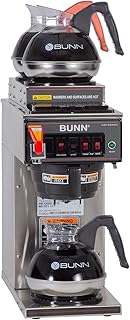
Best Coffee Makers for Hot Coffee in 2026
It sounds obvious that a coffee maker should brew hot coffee well, but a surprising number of machines fall short of the temperature needed for proper extraction, leaving you with a lukewarm, underwhelming cup regardless of how good your beans are. Brew temperature is one of the most overlooked specs buyers check before purchasing, even though it directly determines how much flavor actually makes it into your cup.
This guide covers what actually determines whether a coffee maker brews genuinely hot, flavorful coffee, and how to avoid machines that fall short on this basic requirement.
Compare Products

- EgCoffee Score7.8
EgCoffee Score is a ranking system developed by EgCoffee.com. EgCoffee score has no relationship or impact from any manufacturers or sales agent websites. Learn more
- BrandN/A

- EgCoffee Score6.6
EgCoffee Score is a ranking system developed by EgCoffee.com. EgCoffee score has no relationship or impact from any manufacturers or sales agent websites. Learn more
- BrandN/A

- EgCoffee Score8.4
EgCoffee Score is a ranking system developed by EgCoffee.com. EgCoffee score has no relationship or impact from any manufacturers or sales agent websites. Learn more
- BrandN/A

- EgCoffee Score8.6
EgCoffee Score is a ranking system developed by EgCoffee.com. EgCoffee score has no relationship or impact from any manufacturers or sales agent websites. Learn more
- BrandN/A

- EgCoffee Score8.4
EgCoffee Score is a ranking system developed by EgCoffee.com. EgCoffee score has no relationship or impact from any manufacturers or sales agent websites. Learn more
- BrandN/A

- EgCoffee Score6.6
EgCoffee Score is a ranking system developed by EgCoffee.com. EgCoffee score has no relationship or impact from any manufacturers or sales agent websites. Learn more
- BrandN/A

- EgCoffee Score7.2
EgCoffee Score is a ranking system developed by EgCoffee.com. EgCoffee score has no relationship or impact from any manufacturers or sales agent websites. Learn more
- BrandCuisinart

- EgCoffee Score7.8
EgCoffee Score is a ranking system developed by EgCoffee.com. EgCoffee score has no relationship or impact from any manufacturers or sales agent websites. Learn more
- BrandN/A

- EgCoffee Score8.0
EgCoffee Score is a ranking system developed by EgCoffee.com. EgCoffee score has no relationship or impact from any manufacturers or sales agent websites. Learn more
- BrandOXO

- EgCoffee Score7.8
EgCoffee Score is a ranking system developed by EgCoffee.com. EgCoffee score has no relationship or impact from any manufacturers or sales agent websites. Learn more
- BrandN/A

- EgCoffee Score8.6
EgCoffee Score is a ranking system developed by EgCoffee.com. EgCoffee score has no relationship or impact from any manufacturers or sales agent websites. Learn more
- BrandZojirushi

- EgCoffee Score8.0
EgCoffee Score is a ranking system developed by EgCoffee.com. EgCoffee score has no relationship or impact from any manufacturers or sales agent websites. Learn more
- BrandCuisinart
Last update on 2026-08-04 / Affiliate links / Images, Product Titles, and Product Highlights from Amazon Product Advertising API
The Specialty Coffee Association recommends brewing between 195 and 205 degrees Fahrenheit for optimal extraction, a narrow window where water effectively pulls flavor compounds from ground coffee without scorching them. Machines that brew below this range under extract the coffee, producing a weak, sour tasting cup no matter how much coffee you use, while proper temperature control extracts a fuller, more balanced flavor. This single spec affects your coffee more directly than almost any other feature manufacturers advertise, yet it rarely appears prominently on product packaging or online listings.
Budget machines often use smaller, less powerful heating elements to keep costs down, which struggle to maintain proper temperature throughout a full brew cycle, especially with larger carafe sizes. Some machines also lose heat quickly after brewing if they lack a dedicated warming plate or insulated thermal carafe, leaving coffee to cool rapidly even if it started at the right temperature.
Thermal carafes keep coffee hot for hours without a heating element, which also helps preserve flavor since the coffee is not sitting on a hot plate that can slowly scorch it over time. Glass carafes paired with a warming plate keep coffee hot as well, but flavor tends to degrade faster the longer coffee sits on active heat, sometimes developing a burnt taste within thirty to sixty minutes.
If you tend to drink an entire pot within the first fifteen minutes after brewing, a glass carafe with a warming plate works fine. If coffee tends to sit for an hour or more before you finish it, a thermal carafe generally preserves both heat and flavor noticeably better.
Single serve machines vary meaningfully in brew temperature consistency between models, and cheaper units sometimes brew noticeably cooler than their drip counterparts, especially on their fastest brew size settings. Checking owner reviews specifically for temperature complaints is worth the extra step before buying a single serve machine, since manufacturer specs do not always reflect real world performance accurately.
Look for machines that explicitly advertise meeting the Specialty Coffee Association's brewing standard, since this generally indicates the manufacturer engineered the heating element specifically to hit that target range consistently. A showerhead style water dispenser also matters, since even saturation of the grounds supports more consistent extraction alongside proper temperature.
Mineral buildup from hard water gradually reduces a heating element's efficiency, which can cause a machine that brewed hot when new to brew noticeably cooler after months of use without regular descaling. Staying on a consistent descaling schedule, generally every one to three months depending on water hardness, helps preserve brew temperature performance over the life of the machine.
Running a quick cycle of hot water through an empty carafe before brewing can help preheat the carafe itself, especially with glass carafes that start at room temperature and can pull heat away from freshly brewed coffee. This simple habit is particularly useful in colder climates where a cold carafe has a more noticeable cooling effect on the first cup poured.
Drip machines with a properly engineered heating element generally offer the most consistent hot brewing across a full pot, since the water heats gradually and passes evenly over the grounds. espresso machines brew at a slightly different, more tightly controlled temperature range specific to pressure extraction, and quality machines in this category tend to be more precise about hitting their target range than budget drip machines. Single serve machines fall in between, with performance varying more by specific model than by category, making owner reviews especially important before choosing one for reliably hot coffee.
Even a machine that brews at the perfect temperature loses that advantage quickly if poured into a thin ceramic mug that pulls heat away within minutes. Preheating your mug with hot water before pouring, or switching to a double walled insulated mug, can meaningfully extend how long your coffee actually stays hot after brewing, complementing whatever temperature performance your machine already delivers.
What is the ideal brewing temperature for hot coffee? The Specialty Coffee Association recommends 195 to 205 degrees Fahrenheit for optimal extraction and flavor.
Do thermal carafes really keep coffee hotter than glass carafes with a warming plate? Yes, thermal carafes generally maintain heat longer without the flavor degradation that comes from coffee sitting on an active heating element for extended periods.
Why does my coffee maker brew lukewarm coffee even though it is new? This is often due to an underpowered heating element, particularly common in budget machines, so checking reviews for temperature specific complaints before buying helps avoid this issue.
Does hard water affect how hot my coffee maker brews over time? Yes, mineral buildup reduces heating element efficiency, so regular descaling helps maintain consistent brew temperature as the machine ages.
A coffee maker that genuinely brews hot, well extracted coffee comes down to a properly engineered heating element, the right carafe choice for your habits, and consistent maintenance over time. Prioritize verified brew temperature performance over flashy extra features, and you will end up with noticeably better tasting coffee every single morning, brewed the way it was actually meant to taste rather than a diluted, lukewarm version of it.


Best Coffee Maker With Grinder: The Complete Buying Guide for 2026

Best Small Electric Coffee Makers in 2026: The Complete Buying Guide

Best Hot Chocolate for Keurig Coffee Makers in 2026: The Complete Buying Guide

Best German Made Coffee Makers in 2026: The Complete Buying Guide

Best Electric French Press Coffee Makers in 2026: The Complete Buying Guide