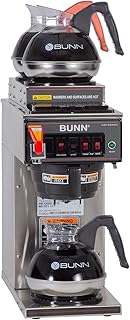
Best Commercial Coffee Makers in 2026
Commercial coffee makers face demands that home machines were never designed to handle, brewing dozens of pots daily for restaurants, offices, and cafes while running for years with minimal downtime. That durability requirement shapes nearly every design decision, from simpler mechanical components to higher output heating elements, and it explains why commercial machines look and perform so differently from even premium home models.
This guide covers what actually separates commercial coffee makers from home machines, and how to choose the right one for a business setting.
Compare Products

- EgCoffee Score8.4
EgCoffee Score is a ranking system developed by EgCoffee.com. EgCoffee score has no relationship or impact from any manufacturers or sales agent websites. Learn more
- BrandBosch

- EgCoffee Score9.0
EgCoffee Score is a ranking system developed by EgCoffee.com. EgCoffee score has no relationship or impact from any manufacturers or sales agent websites. Learn more
- BrandN/A

- EgCoffee Score7.6
EgCoffee Score is a ranking system developed by EgCoffee.com. EgCoffee score has no relationship or impact from any manufacturers or sales agent websites. Learn more
- BrandN/A

- EgCoffee Score8.2
EgCoffee Score is a ranking system developed by EgCoffee.com. EgCoffee score has no relationship or impact from any manufacturers or sales agent websites. Learn more
- BrandN/A

- EgCoffee Score9.2
EgCoffee Score is a ranking system developed by EgCoffee.com. EgCoffee score has no relationship or impact from any manufacturers or sales agent websites. Learn more
- BrandBUNN

- EgCoffee Score8.6
EgCoffee Score is a ranking system developed by EgCoffee.com. EgCoffee score has no relationship or impact from any manufacturers or sales agent websites. Learn more
- BrandN/A

- EgCoffee Score8.0
EgCoffee Score is a ranking system developed by EgCoffee.com. EgCoffee score has no relationship or impact from any manufacturers or sales agent websites. Learn more
- BrandN/A

- EgCoffee Score9.0
EgCoffee Score is a ranking system developed by EgCoffee.com. EgCoffee score has no relationship or impact from any manufacturers or sales agent websites. Learn more
- BrandN/A

- EgCoffee Score8.4
EgCoffee Score is a ranking system developed by EgCoffee.com. EgCoffee score has no relationship or impact from any manufacturers or sales agent websites. Learn more
- BrandN/A

- EgCoffee Score9.0
EgCoffee Score is a ranking system developed by EgCoffee.com. EgCoffee score has no relationship or impact from any manufacturers or sales agent websites. Learn more
- BrandN/A

- EgCoffee Score7.2
EgCoffee Score is a ranking system developed by EgCoffee.com. EgCoffee score has no relationship or impact from any manufacturers or sales agent websites. Learn more
- BrandN/A

- EgCoffee Score4.2
EgCoffee Score is a ranking system developed by EgCoffee.com. EgCoffee score has no relationship or impact from any manufacturers or sales agent websites. Learn more
- BrandN/A
Last update on 2026-08-04 / Affiliate links / Images, Product Titles, and Product Highlights from Amazon Product Advertising API
Commercial machines are built around continuous daily use, typically rated for dozens of brew cycles per day compared to the handful a home machine might handle. This means larger, more robust heating elements, simpler mechanical designs that are easier to repair, and components rated for a duty cycle far beyond what any home appliance is expected to endure.
Many commercial machines also carry NSF certification, confirming they meet sanitation and safety standards required in food service settings, a certification rarely relevant to home coffee makers.
Batch brewers remain the standard in most offices, restaurants, and cafes needing to serve many people quickly, using an internal hot water reserve similar in concept to BUNN's home lineup but scaled for much higher volume output. These machines typically brew a full pot in three to four minutes and can handle back to back brewing throughout a busy service period without a meaningful drop in performance.
Many commercial settings pair a batch brewer with airpot dispensers rather than traditional carafes, since airpots keep coffee hot for hours without a warming plate and allow multiple pots to stay ready simultaneously during peak hours. This setup also reduces the flavor degradation that comes from coffee sitting on active heat for extended periods, an especially important factor in settings where coffee might sit for an hour or more before being poured.
Commercial espresso machines represent a significant step up from even high end home semi automatic machines, typically featuring multiple group heads for simultaneous shot pulling, larger boilers for sustained steam output, and components engineered for hundreds of daily shots rather than a handful. These machines require more specialized installation, often including a dedicated water line, and generally need professional servicing rather than DIY maintenance.
Overbuying capacity wastes money upfront and on ongoing energy costs, while underbuying leads to bottlenecks during peak demand and premature wear from running a machine constantly at its limit. Estimate your realistic peak hour demand rather than average daily volume when sizing a commercial machine, since peak demand is what actually determines whether the equipment can keep up. A restaurant with a concentrated morning rush has very different needs than an office with steady, spread out demand throughout the day, even if their total daily cup counts end up roughly similar.
Commercial machines need a far more disciplined maintenance schedule than home equipment, since the consequences of neglect scale with usage volume. Daily cleaning of brew baskets and dispensing components, along with a strict descaling schedule based on both water hardness and brew volume, is essential to avoid costly breakdowns during business hours. Assigning maintenance responsibility to a specific staff member rather than leaving it to whoever happens to notice a problem also meaningfully reduces how often equipment gets neglected during busy stretches.
Many commercial operations maintain a service contract with the equipment manufacturer or a local repair company, since downtime on a primary brewing machine can directly affect revenue in a cafe or restaurant setting.
Commercial coffee equipment carries a significantly higher upfront cost than home machines, but total cost of ownership also includes higher energy consumption, professional installation in some cases, and ongoing maintenance contracts. Factor these recurring costs into your budget rather than focusing solely on the purchase price when comparing options, since the cheapest machine upfront can easily end up costing more over several years once service calls and energy use are accounted for.
Smaller offices and businesses that do not need continuous high volume brewing often turn to commercial grade single cup systems instead of a full batch brewer, offering variety for employees with different preferences without the waste of brewing full pots that go partially unused. These systems typically use commercial durability components while retaining the convenience of single serve pods, striking a middle ground between home style equipment and full scale commercial batch brewing.
Commercial machines process far more water over their lifespan than home equipment, making proper filtration even more critical for both taste consistency and equipment longevity. Many commercial installations include a dedicated filtration system plumbed directly into the water line, reducing mineral buildup and chlorine taste across every cup served without requiring manual filter changes the way a pitcher filter would at home.
What is the main difference between commercial and home coffee makers? Commercial machines are engineered for continuous high volume use with more robust components, often NSF certified, while home machines are designed for a handful of daily brew cycles.
Do commercial coffee makers need professional installation? Many do, particularly larger batch brewers and espresso machines requiring a dedicated water line, though smaller commercial units can sometimes be set up without professional help.
How often should a commercial coffee maker be descaled? More frequently than home machines due to higher brew volume, often monthly or more depending on water hardness and daily usage levels.
Choosing the right commercial coffee maker comes down to accurately estimating your peak volume needs and committing to the maintenance schedule that keeps high volume equipment running reliably. A properly sized, well maintained commercial machine will outlast and outperform a home unit pushed beyond its intended use by a wide margin, saving money on premature replacements and unplanned downtime over the equipment's full working life.


Best Coffee Maker With Grinder: The Complete Buying Guide for 2026

Best Small Electric Coffee Makers in 2026: The Complete Buying Guide

Best Hot Chocolate for Keurig Coffee Makers in 2026: The Complete Buying Guide

Best German Made Coffee Makers in 2026: The Complete Buying Guide

Best Electric French Press Coffee Makers in 2026: The Complete Buying Guide