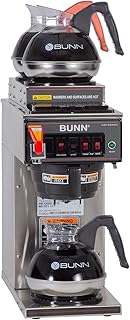
Best Plumbed Coffee Makers in 2026
Plumbed coffee makers connect directly to a water line, eliminating the need to manually fill a reservoir before every brew cycle, which makes them especially popular in busy offices, shared break rooms, and high volume home kitchens with frequent daily use. This direct connection offers genuine everyday convenience, though it comes with a handful of installation considerations that a standard reservoir machine simply does not require at all.
This guide covers how plumbed coffee makers work, who benefits most from this setup, and exactly what to know before installing one in your own home kitchen or workplace break room.
Compare Products

- EgCoffee Score9.0
EgCoffee Score is a ranking system developed by EgCoffee.com. EgCoffee score has no relationship or impact from any manufacturers or sales agent websites. Learn more
- BrandN/A

- EgCoffee Score8.2
EgCoffee Score is a ranking system developed by EgCoffee.com. EgCoffee score has no relationship or impact from any manufacturers or sales agent websites. Learn more
- BrandN/A

- EgCoffee Score8.4
EgCoffee Score is a ranking system developed by EgCoffee.com. EgCoffee score has no relationship or impact from any manufacturers or sales agent websites. Learn more
- BrandBosch

- EgCoffee Score8.0
EgCoffee Score is a ranking system developed by EgCoffee.com. EgCoffee score has no relationship or impact from any manufacturers or sales agent websites. Learn more
- BrandN/A

- EgCoffee Score8.8
EgCoffee Score is a ranking system developed by EgCoffee.com. EgCoffee score has no relationship or impact from any manufacturers or sales agent websites. Learn more
- BrandN/A

- EgCoffee Score8.8
EgCoffee Score is a ranking system developed by EgCoffee.com. EgCoffee score has no relationship or impact from any manufacturers or sales agent websites. Learn more
- BrandN/A

- EgCoffee Score8.8
EgCoffee Score is a ranking system developed by EgCoffee.com. EgCoffee score has no relationship or impact from any manufacturers or sales agent websites. Learn more
- BrandN/A

- EgCoffee Score8.2
EgCoffee Score is a ranking system developed by EgCoffee.com. EgCoffee score has no relationship or impact from any manufacturers or sales agent websites. Learn more
- BrandN/A

- EgCoffee Score7.8
EgCoffee Score is a ranking system developed by EgCoffee.com. EgCoffee score has no relationship or impact from any manufacturers or sales agent websites. Learn more
- BrandBUNN

- EgCoffee Score8.4
EgCoffee Score is a ranking system developed by EgCoffee.com. EgCoffee score has no relationship or impact from any manufacturers or sales agent websites. Learn more
- BrandN/A

- EgCoffee Score7.6
EgCoffee Score is a ranking system developed by EgCoffee.com. EgCoffee score has no relationship or impact from any manufacturers or sales agent websites. Learn more
- BrandN/A

- EgCoffee Score9.0
EgCoffee Score is a ranking system developed by EgCoffee.com. EgCoffee score has no relationship or impact from any manufacturers or sales agent websites. Learn more
- BrandBreville
Last update on 2026-08-05 / Affiliate links / Images, Product Titles, and Product Highlights from Amazon Product Advertising API
A plumbed coffee maker connects to your existing water supply through a dedicated line, typically tapped from a nearby cold water pipe, refrigerator line, or a standalone water filtration system installed specifically for the machine. Internal components regulate water flow and pressure automatically, ensuring the machine always has exactly the water it needs without any manual filling required before each brew.
Most plumbed machines include an internal pressure regulator and solenoid valve system that opens briefly to draw in water only as needed during each brew cycle, rather than holding a continuous open connection to the supply line. This design protects the machine's internal components from excess pressure while still delivering the on demand water access that makes the plumbed setup so convenient in the first place.
The primary benefit is convenience, since you never need to remember to fill a reservoir, which matters considerably for high volume settings where the machine brews many pots throughout the day. Plumbed machines also tend to deliver more consistent water pressure and flow than reservoir models, which can translate into slightly more consistent extraction quality across many repeated brew cycles throughout a busy day.
Installing a plumbed coffee maker typically requires access to a nearby water line, appropriate connection fittings, and sometimes professional installation if you are not comfortable with basic plumbing work yourself. Many buyers also add a dedicated water filtration system during installation, since filtered water meaningfully improves flavor and helps prevent mineral buildup inside the machine's internal components over time.
Reservoir machines offer more flexibility in placement, since they do not require proximity to a water line, making them the practical choice for most home kitchens without existing water access at the counter. Plumbed machines make more sense in commercial settings or high volume households already equipped with the necessary water access, where eliminating manual filling provides genuine daily time savings.
It is also worth considering that many machines are available in both plumbed and reservoir configurations of essentially the same model, letting you choose the water supply method without sacrificing the brewing features and capacity you actually want. This flexibility means the decision often comes down purely to your available water access and installation appetite rather than any meaningful difference in the coffee itself.
Offices, break rooms, and commercial kitchens benefit most from plumbed setups due to high daily brew volume, while large households that drink significant amounts of coffee throughout the day can also see real value from the convenience. Smaller households or those without convenient existing water line access are usually far better served by a standard reservoir machine instead of a plumbed setup.
Plumbed machines still require regular descaling like any other coffee maker, though the direct water connection means you should pay particular attention to water hardness and filtration, since continuous water flow can accelerate mineral buildup if left unaddressed. Periodically checking connection fittings for leaks or slow drips is also part of routine maintenance that standard reservoir machines simply do not require at all.
Beyond the machine's purchase price, budget for installation costs, including fittings, potential professional plumbing labor, and an optional dedicated water filtration system if you choose to add one. These additional costs mean a plumbed setup often carries a higher total upfront investment than a comparable reservoir machine, even when the machines themselves cost similarly.
For a home installation, expect installation costs to vary considerably depending on how far the machine sits from an existing water line and whether a professional plumber is required to complete the connection safely. Commercial installations often factor these costs into a broader kitchen or break room renovation budget, making the incremental cost of plumbing in a coffee maker comparatively smaller than a standalone residential install.
Because plumbed machines draw continuously from your general water supply rather than a pre filled reservoir, pairing the connection with a dedicated inline water filter meaningfully improves both flavor and long term reliability. Unfiltered tap water with high mineral content can accelerate scale buildup inside a plumbed machine considerably faster than the same water sitting briefly in a manually filled reservoir, making filtration a particularly worthwhile addition rather than an optional extra.
Do plumbed coffee makers require professional installation? It depends on your comfort with basic plumbing and existing water line access, though many buyers still choose professional installation to ensure a proper, genuinely leak free connection over the long run.
Is a plumbed coffee maker worth it for a home kitchen? For large households with high daily coffee consumption and convenient water access, yes, though most smaller households are typically better served by a standard reservoir machine instead of the added installation complexity.
Do plumbed machines need less maintenance than reservoir machines? Not necessarily, since they still require regular descaling and additionally need periodic checks on connection fittings for slow leaks or worn seals over time.
Plumbed coffee makers offer genuine convenience for high volume settings by eliminating manual reservoir filling, though they require more installation planning and upfront investment than standard machines. Weighing your actual daily coffee volume against installation complexity and total upfront cost helps determine whether this particular setup genuinely makes sense for your specific kitchen or workplace environment.


Best Coffee Maker With Grinder: The Complete Buying Guide for 2026

Best Small Electric Coffee Makers in 2026: The Complete Buying Guide

Best Hot Chocolate for Keurig Coffee Makers in 2026: The Complete Buying Guide

Best German Made Coffee Makers in 2026: The Complete Buying Guide

Best Electric French Press Coffee Makers in 2026: The Complete Buying Guide