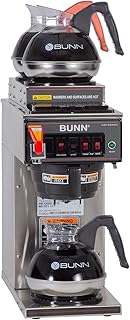
Best Tasting Coffee Makers in 2026
Plenty of coffee makers brew a technically complete cup without ever producing coffee that genuinely tastes good. The difference between an average, forgettable cup and a genuinely great one usually comes down to a handful of specific engineering details that many buyers never think to check before purchasing, rather than price or brand name recognition alone.
This guide covers what actually separates the best tasting coffee makers from the rest, focusing squarely on the mechanical factors that most directly affect flavor in the final cup you actually drink.
Compare Products

- EgCoffee Score8.6
EgCoffee Score is a ranking system developed by EgCoffee.com. EgCoffee score has no relationship or impact from any manufacturers or sales agent websites. Learn more
- BrandNinja

- EgCoffee Score7.0
EgCoffee Score is a ranking system developed by EgCoffee.com. EgCoffee score has no relationship or impact from any manufacturers or sales agent websites. Learn more
- BrandBreville

- EgCoffee Score8.0
EgCoffee Score is a ranking system developed by EgCoffee.com. EgCoffee score has no relationship or impact from any manufacturers or sales agent websites. Learn more
- BrandBreville

- EgCoffee Score6.6
EgCoffee Score is a ranking system developed by EgCoffee.com. EgCoffee score has no relationship or impact from any manufacturers or sales agent websites. Learn more
- BrandN/A

- EgCoffee Score9.2
EgCoffee Score is a ranking system developed by EgCoffee.com. EgCoffee score has no relationship or impact from any manufacturers or sales agent websites. Learn more
- BrandNinja

- EgCoffee Score9.2
EgCoffee Score is a ranking system developed by EgCoffee.com. EgCoffee score has no relationship or impact from any manufacturers or sales agent websites. Learn more
- BrandKeurig

- EgCoffee Score8.2
EgCoffee Score is a ranking system developed by EgCoffee.com. EgCoffee score has no relationship or impact from any manufacturers or sales agent websites. Learn more
- BrandKeurig

- EgCoffee Score9.2
EgCoffee Score is a ranking system developed by EgCoffee.com. EgCoffee score has no relationship or impact from any manufacturers or sales agent websites. Learn more
- BrandN/A

- EgCoffee Score9.2
EgCoffee Score is a ranking system developed by EgCoffee.com. EgCoffee score has no relationship or impact from any manufacturers or sales agent websites. Learn more
- BrandKeurig

Cuisinart DCC-1200P1 Brew Central 12-Cup Programmable Coffeemaker Coffee Maker, Carafe,
View on Amazon- EgCoffee Score9.2
EgCoffee Score is a ranking system developed by EgCoffee.com. EgCoffee score has no relationship or impact from any manufacturers or sales agent websites. Learn more
- BrandN/A

- EgCoffee Score8.0
EgCoffee Score is a ranking system developed by EgCoffee.com. EgCoffee score has no relationship or impact from any manufacturers or sales agent websites. Learn more
- BrandCuisinart

- EgCoffee Score9.2
EgCoffee Score is a ranking system developed by EgCoffee.com. EgCoffee score has no relationship or impact from any manufacturers or sales agent websites. Learn more
- BrandN/A
Last update on 2026-08-04 / Affiliate links / Images, Product Titles, and Product Highlights from Amazon Product Advertising API
We compared brew temperature consistency, water distribution design, and verified owner reviews that specifically mention flavor rather than just convenience or looks. Machines with a clear pattern of complaints about weak, bitter, or inconsistent tasting coffee were ruled out regardless of how many other features they offered, since flavor above all else was the central criterion for this particular evaluation.
The Specialty Coffee Association recommends brewing between 195 and 205 degrees Fahrenheit for proper extraction, and many budget machines fall well short of that range, resulting in flat, underextracted coffee no matter how good the beans actually are. If a specific machine consistently gets mentioned in reviews for producing weak or lukewarm coffee, that is almost always a temperature issue rather than a beans or grind problem entirely.
Machines with a showerhead style water dispenser saturate the entire bed of grounds evenly, producing a more consistent extraction than machines that pour from a single fixed point and rely on the grounds to distribute water themselves. This single design detail explains a meaningful amount of the flavor difference between otherwise similarly priced coffee makers.
No coffee maker, regardless of engineering quality, can fully compensate for stale, pre ground coffee or the wrong grind size for the brewing method. Freshly ground beans, ground immediately before brewing, consistently outperform pre ground coffee in flavor, even on a modest machine, which is worth remembering before assuming equipment alone explains disappointing results.
Since coffee is mostly water by volume, using filtered water rather than straight tap water can noticeably improve flavor, particularly in areas with strong mineral content or a noticeable chlorine taste. Some higher end machines include built in water filtration specifically to address this concern, while a simple pitcher filter works just as well paired with almost any machine.
A glass carafe sitting on a continuously heated warming plate keeps reheating the coffee, gradually degrading flavor and often producing a burnt taste within thirty to forty five minutes. A thermal carafe avoids this by relying on insulation rather than ongoing heat, preserving flavor much closer to how it tasted right after brewing for several hours afterward.
Manual brewing methods like pour over and French press give you direct control over pour speed, contact time, and water temperature, which is why many coffee enthusiasts consider them capable of producing a more nuanced cup than fully automatic machines. A well engineered automatic machine can close much of that gap, but manual technique still offers the finest degree of control for anyone willing to put in the effort.
Even the best machine will produce disappointing coffee if the ratio of coffee to water is off, so pay attention to the markings on your reservoir and grounds basket rather than eyeballing amounts each time. A common starting ratio is roughly two tablespoons of ground coffee for every six ounces of water, adjusted gradually from there based on your own personal taste preference over time.
Mineral buildup and old coffee oils trapped inside a machine can subtly degrade flavor long before the problem becomes obvious, which is why regular descaling and daily rinsing matter just as much as the machine's original engineering. A perfectly good machine that has gone months without cleaning will taste noticeably worse than the same machine maintained properly.
No coffee maker can fully override the inherent character of the beans themselves, so pairing a well engineered machine with beans that suit your taste preferences, whether that means a bright, fruity light roast or a bold, chocolatey dark roast, remains an important part of the overall flavor equation alongside the equipment itself.
Does a more expensive coffee maker always taste better? Not automatically. Price often reflects build quality and extra features more than it guarantees better flavor, though machines that hit proper brew temperature reliably do tend to cost somewhat more than the cheapest budget options.
Can I improve the taste of coffee from a machine I already own? Yes, often quite significantly. Using freshly ground beans, filtered water, and drinking coffee soon after brewing rather than letting it sit on a warming plate can meaningfully improve flavor even on a fairly average machine.
Is brew temperature something I can check before buying a machine? Look specifically for reviews mentioning brew temperature or references to Specialty Coffee Association standards, since manufacturers do not always advertise this specification prominently despite how much it affects flavor.
Does the type of water filter I use really make a difference? Yes, even a basic pitcher filter can noticeably reduce chlorine taste and mineral content compared to straight tap water, which translates directly into a noticeably cleaner tasting final cup overall.
The best tasting coffee makers combine proper brew temperature, even water distribution, and thoughtful carafe design, not just an appealing price or feature list. Pair a well engineered machine with fresh, properly ground beans and good water, and you will notice a meaningfully better cup regardless of how much the machine itself costs, cup after cup, day after day.


Best Coffee Maker With Grinder: The Complete Buying Guide for 2026

Best Small Electric Coffee Makers in 2026: The Complete Buying Guide

Best Hot Chocolate for Keurig Coffee Makers in 2026: The Complete Buying Guide

Best German Made Coffee Makers in 2026: The Complete Buying Guide

Best Electric French Press Coffee Makers in 2026: The Complete Buying Guide